
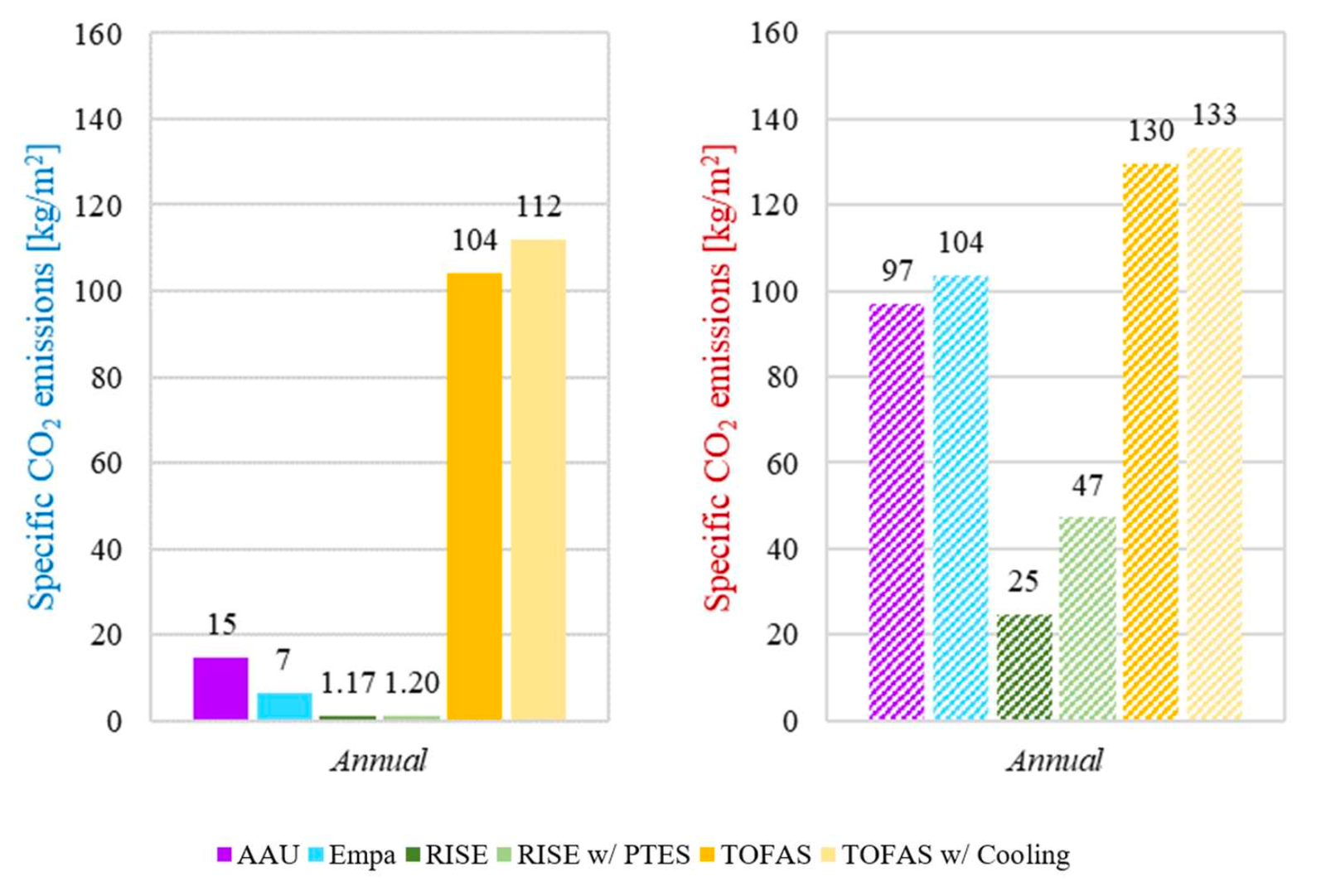
This deliverable evaluates the decarbonization potential of integrating on-site solar photovoltaic (PV) and photovoltaic-thermal (PVT) systems across five HEATWISE demo sites with diverse climates and energy needs. The simulations reveal that while specific annual PV yields range between 209 and 342 kWh/m²·year, a system’s true impact is dictated by its available installation surface and local demand. For instance, limited roof space caps electricity self-coverage at 12% for AAU and EMPA, whereas larger configurations at TOFAS and RISE maximize generation—with RISE even producing a monthly electricity surplus.
Integrating PVT systems boosts total energy yield per unit area, providing thermal outputs two to three times higher than their electrical production. To overcome low summer heat demand and maximize these thermal yields, the study analyzed a seasonal pit thermal energy storage (PTES) system for the RISE site, which successfully drove its annual solar fraction to 97% and nearly doubled avoided CO₂ emissions. Ultimately, the high-demand PSNC site highlights that limited space can bottleneck on-site solar impact, proving that installation scale, demand matching, and storage are the decisive factors for effectively decarbonizing tertiary buildings.